
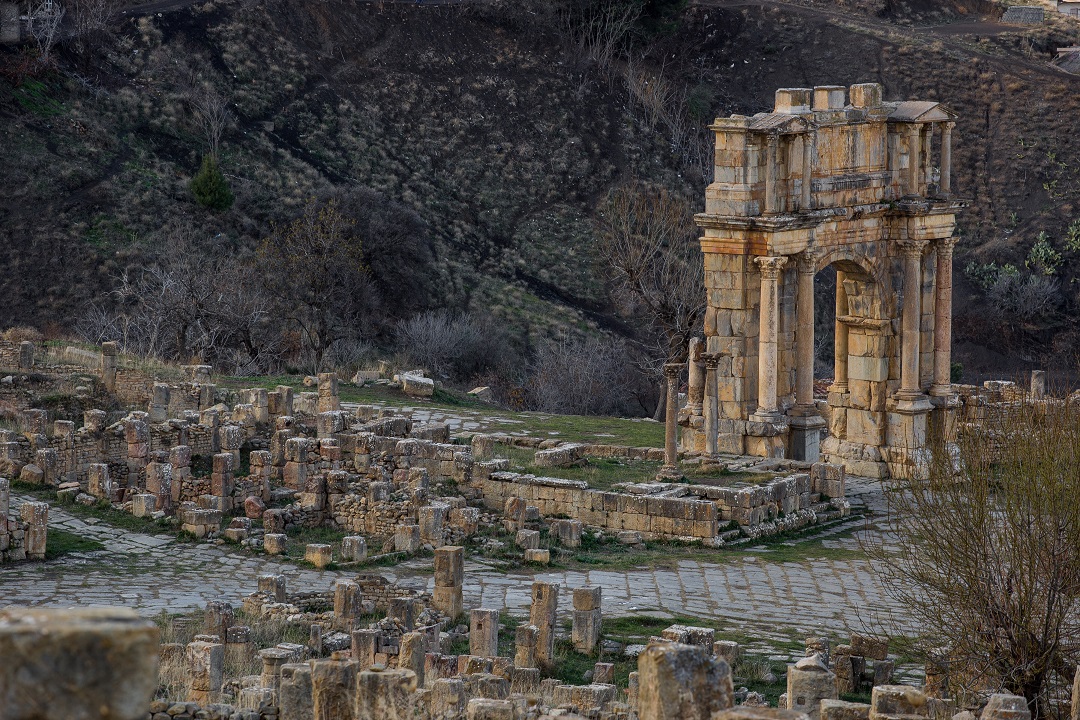
It may be close to Europe, but for most people Algeria is something of a mystery. Yet, it wasn’t always like this. Two thousand years ago northern Algeria was the breadbasket of the Roman Empire. Today, the Roman ruins scattered across northern Algeria are some of the most spectacular in existence. So, come with Native Eye on a journey back in time to Algeria’s Roman ruins.
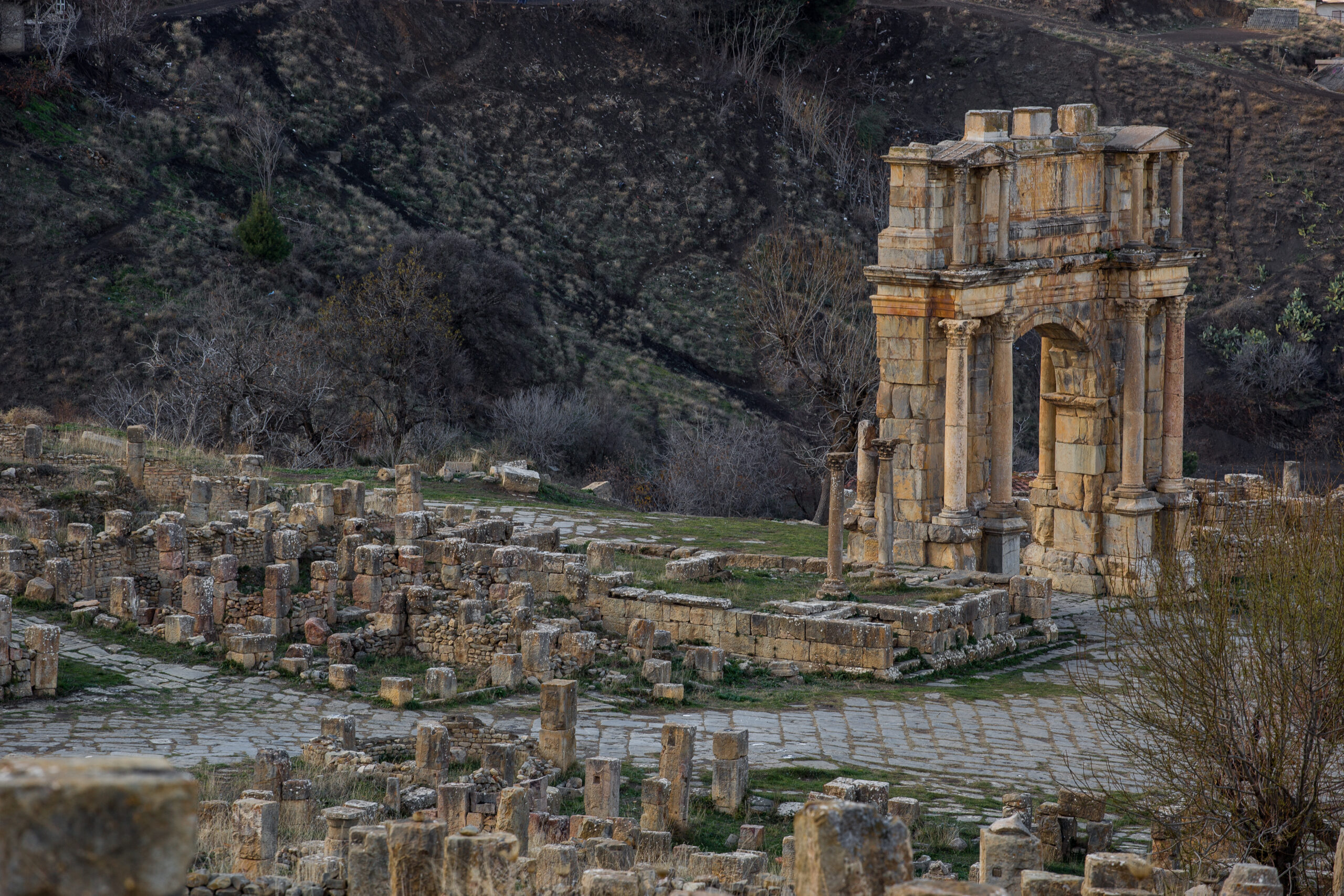
The only sound was the crunch of my feet on ancient cobbles. The only other movement a lonely crow taking to the wing as I passed. Coming to a millennium old theatre complex I sat down among the ghosts of long ago and stared out across a landscape littered with columns, arches and broken walls. Nearly two thousand years ago this had been a thriving Roman garrison town. Noisy markets would have been stuffed with produce from across the empire; soldiers would have stamped down the streets; priests would have lit incense in the great temples and laughter would have echoed around the theatre I was now sat in. But today, the Roman city of Timgad, high on an Algerian mountain plateau, seems forgotten by the world.
A mystery to most, Algeria is the sleeping giant of Africa. For the most part, this is a land of vast desert horizons (more than 80 percent of Algeria is covered by the Sahara) of extraordinary beauty (as you can discover on our Algeria – Jewel of the Sahara tour). But, north of the desert is a very different Algeria. A Mediterranean facing Algeria of fishing ports, olive groves and mountains. It was this Algeria that, two thousand years ago, caught the attention of Rome. The Romans built magnificent towns and cities here and turned northern Algeria into the breadbasket of the Roman Empire.
Today, reminders of Rome are abundant in Algeria. While there are officially around five hundred Roman sites in Algeria, many of these are mere rocky humps in the landscape and they’re unlikely to grab the attention of anyone but an archaeologist. But, as I had discovered on the cobbled streets of Timgad, there are some that would rank among the finest Roman ruins in existence.
On our Native Eye Algerian Odyssey tour we follow in the footsteps of the Roman legionnaires to some of the most romantic and important Roman sites in Algeria. So, let’s venture back in time to find out more about some of Algeria’s Roman highlights.
Museum of Antiquities, Algiers
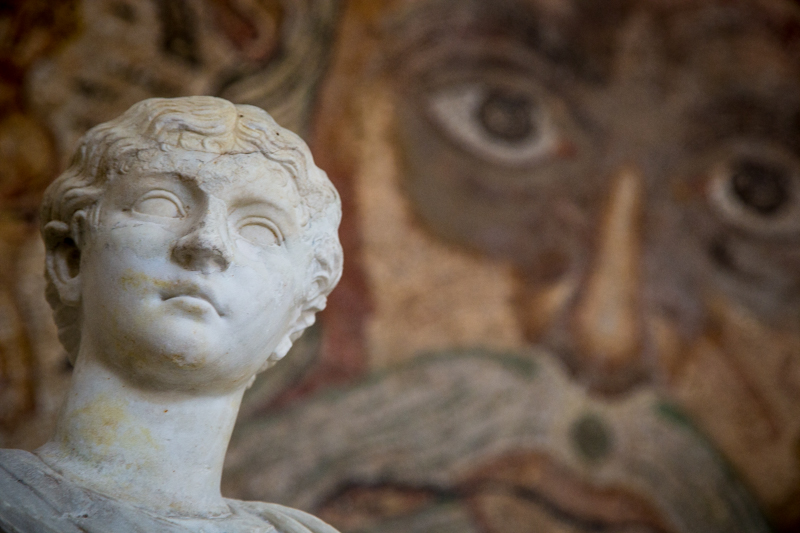
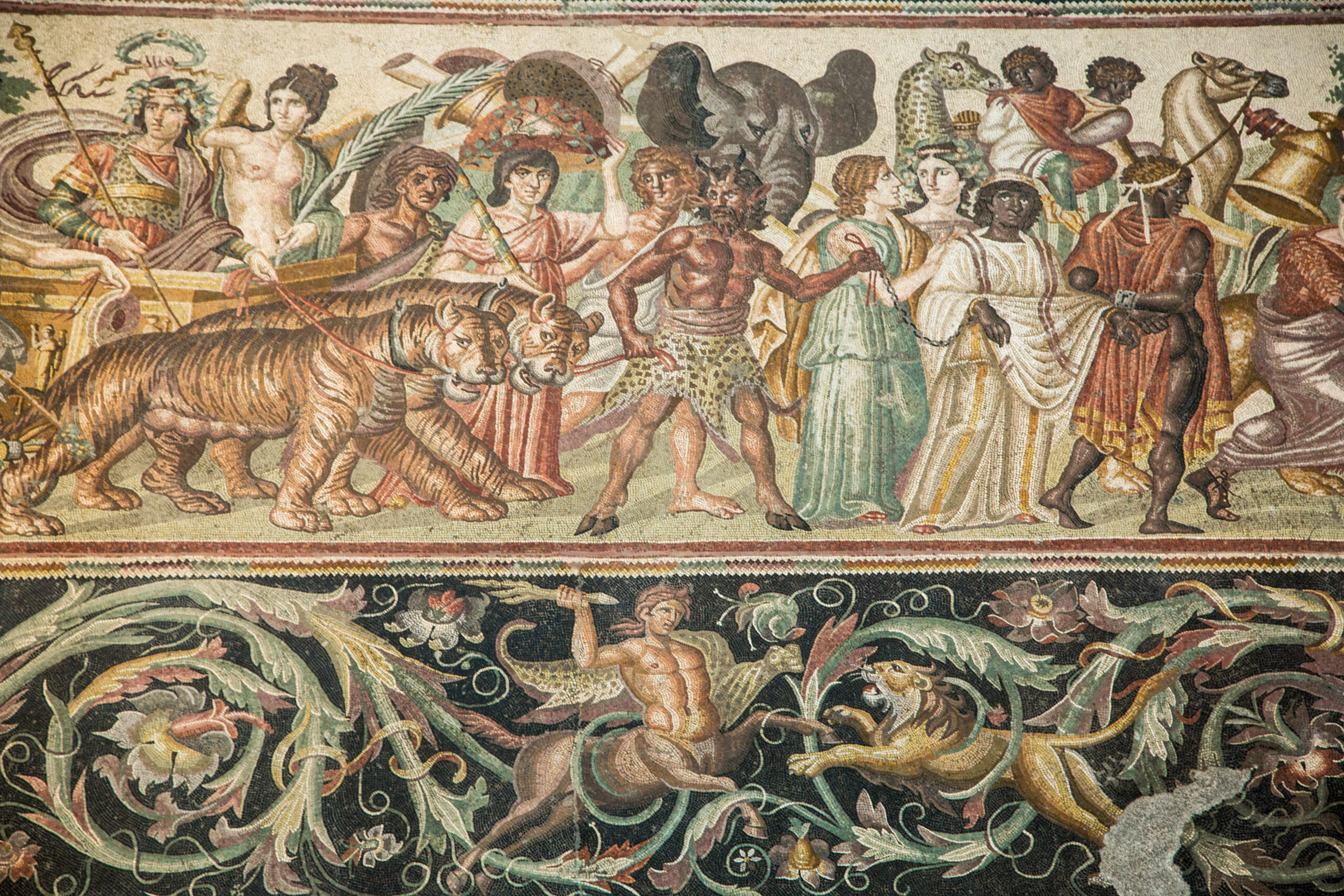
Our delve into Algeria’s deep past doesn’t actually start in a Roman theatre but in the twisting streets of the Casbah (old town) in Algiers, the capital of Algeria, and, more specifically, the Museum of Antiquities. This treasure filled museum houses a stunning collection of finds from Roman sites across the land will give you a crash course in this chapter of Algeria’s long history. The collection of perfectly preserved mosaics is especially noteworthy. Away from Rome, the museum also highlights Algeria’s prehistory and its Islamic past and present. Our time in Algiers isn’t limited to just this museum though. We also check out the Bardo Museum of Prehistory and Ethnography and admire the French colonial architecture (best expressed in the former main post office), but for most of our guests the fondest Algiers memories are of simply admiring the sweeping views out over the Mediterranean.
Tipasa and Cherchell
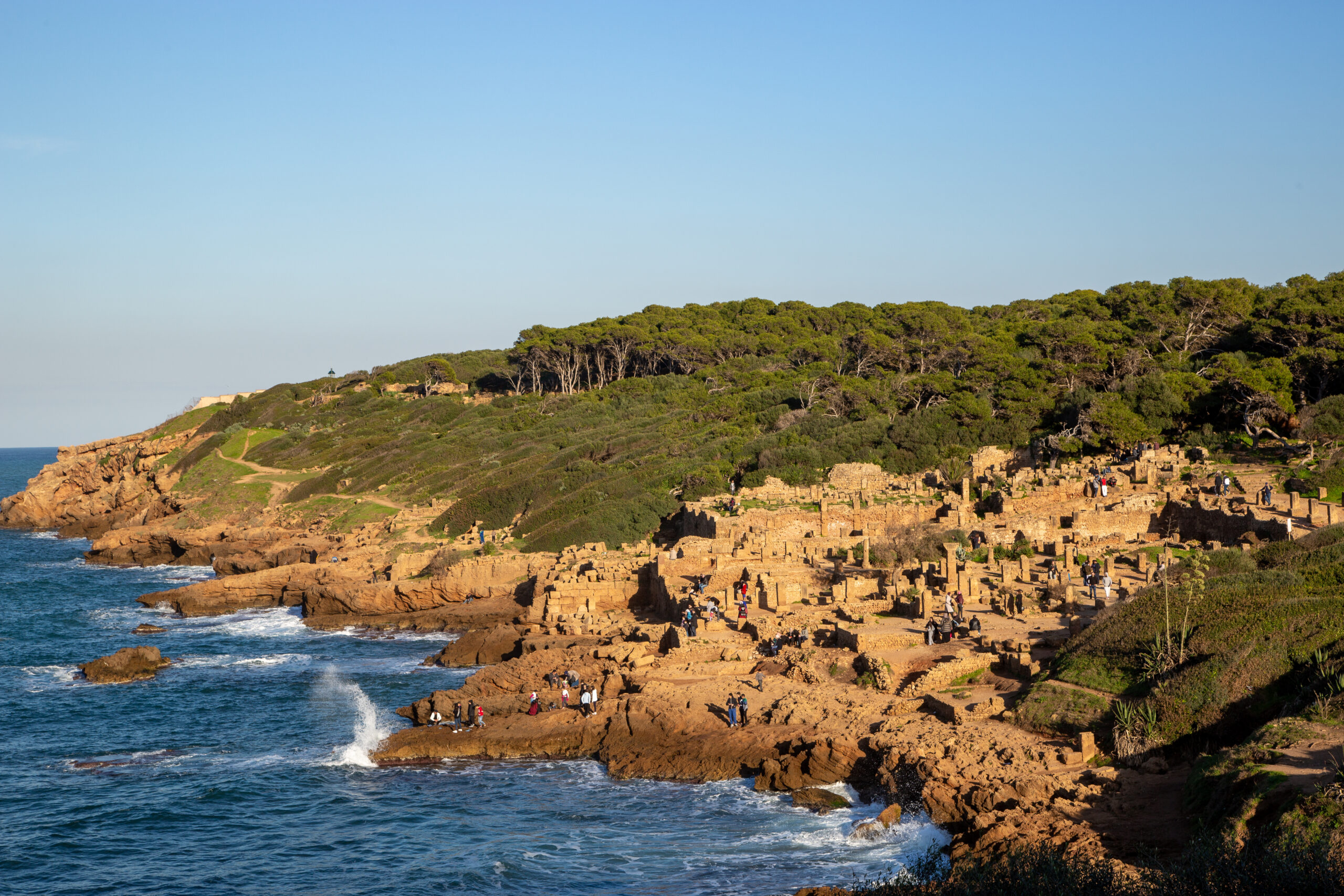
A short drive west of Algiers are two small coastal towns with a big Roman past. Cherchell started life as a Phoenician trading port in the 6th Century BC. By the first century CE, Cherchell had become a regional capital and a flourishing centre of Greco-Roman culture. The arrival of the Vandals in the 5th Century was the start of a long decline for the city. What makes Cherchell a worthy visit today is the way the remaining Roman ruins have been incorporated into the modern towns layout and so giving a deep sense of the layers and layers of history found here. On a different note, the oranges grown around here might be the sweetest you ever try! From Cherchell, our Algerian Odyssey tour heads to the nearby, and evocatively set, Roman trading town of Tipasa. Spilling downhill under the shade of olive, cork and pine trees, the Unesco World Heritage listed site ends a sandy footstep away from the waters of the Mediterranean. It’s this natural beauty, as much as the honey toned ruins of the market and a theatre where naval battles were once reenacted, that makes Tipasa such a special place. On sunny weekends crowds of locals from Algiers come here to enjoy the rocky coves and to picnic among the ruins.
Tiddis

Ferreted away on a hillside like an Algerian version of Machu Picchu, the weathered but highly atmospheric ruins of Tiddis lie a short way from the city of Constantine (in itself a spectacular city set on a rock outcrop that rises out of a gorge). A garrison town, whose purpose was to defend Constantine, Tiddis has a very different look and feel to Algeria’s other Roman sites. Instead of being spread out confidently over the plains, Tiddis is tucked into the nooks and crannies of the mountain slope on which it was built with caves being incorporated into some of the Roman era buildings design. Much of the site remains unexcavated which makes Tiddis a great place to find a quiet corner and reflect on what might still be buried under your feet.
Timgad
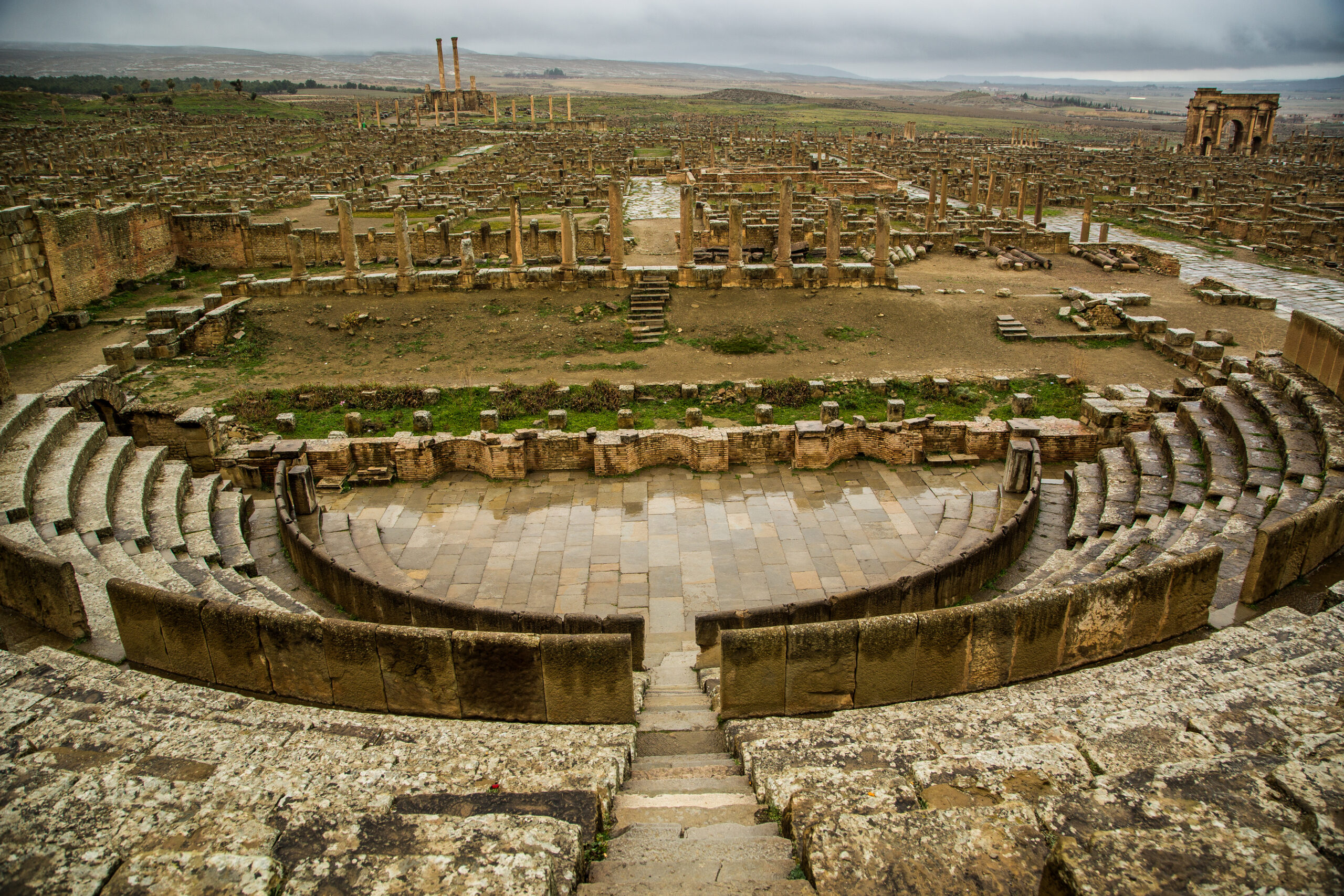
Although it’s sometimes referred to as the Pompeii of Africa, the truth is that this statement rather undersells Timgad. Sprawling as far as the eye can see over a vast agricultural plateau, Timgad is quite simply one of the most extensive and best-preserved Roman cities in existence. Founded by the Roman Emperor, Trajan, around the year 100CE as a bastion against the native Berber tribes, it quickly grew to become a major urban centre. It was finally abandoned in the 7th century after being attacked by the Vandals. For a thousand years it remained largely forgotten by the outside world until Scottish explorer James Bruce visited it in 1765. Its remote location means that even today it remains little visited. Sitting alone in one of the great temples, or walking down the main through fare, and the sense of the past all around you can be so powerful it can make a first-time visitor emotional.
Djemila
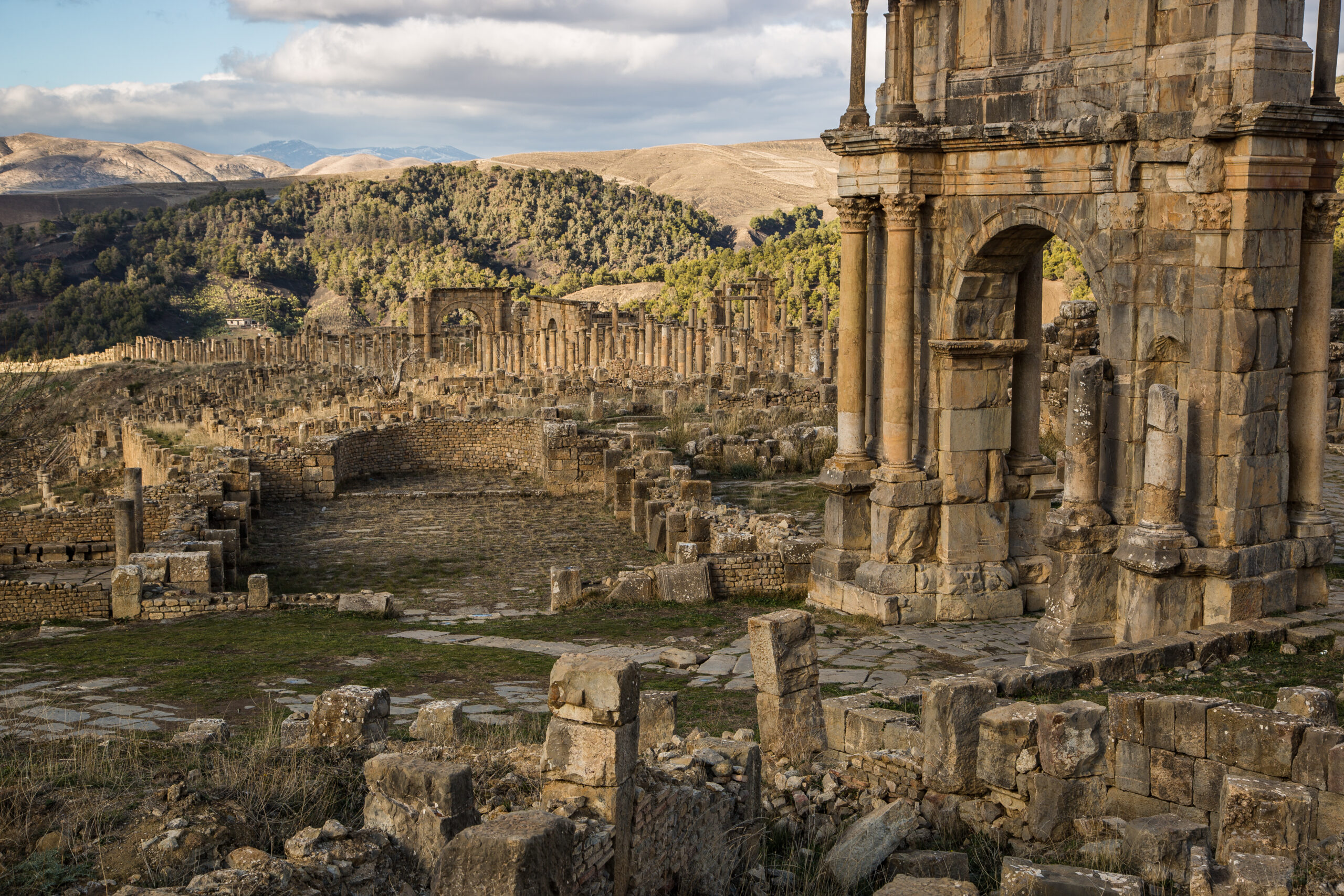
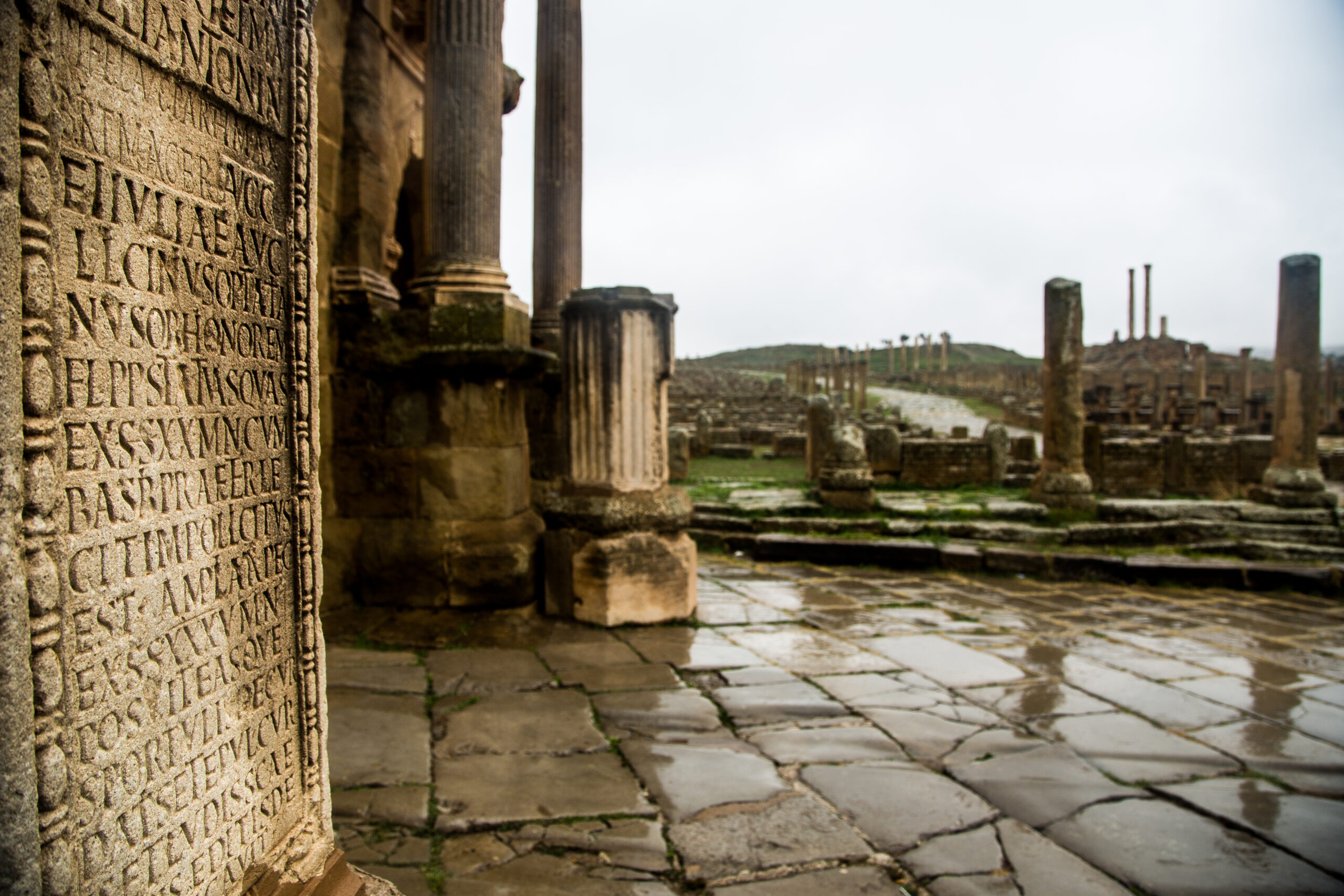
Founded in the 1st Century AD as a military outpost and abandoned around five hundred years later, the word Djemila translates as ‘beautiful’. It’s a simple name, but it’s one that’s undeniably appropriate. Yes, there are other Roman sites in Algeria that might be bigger, but Djemila has a grace and a mountain meadow setting that speaks of poetry.
The French philosopher and writer Albert Camus once described Djemila as, ‘a lesson in love and patience’ and it’s certainly true that a visit to Djemila should not be rushed. Instead, take the time to inhabit the place and let your mind run riot with the spirits of its Roman past. Do that and you never know, but you might just pick up an echo of Latin voices raised in debate at the Forum or perhaps, in the shadows of the Arch of Caracalla, you might swear that you just a fleeting glimpse of a figure in a white toga and sandals.
Algerian Odyssey
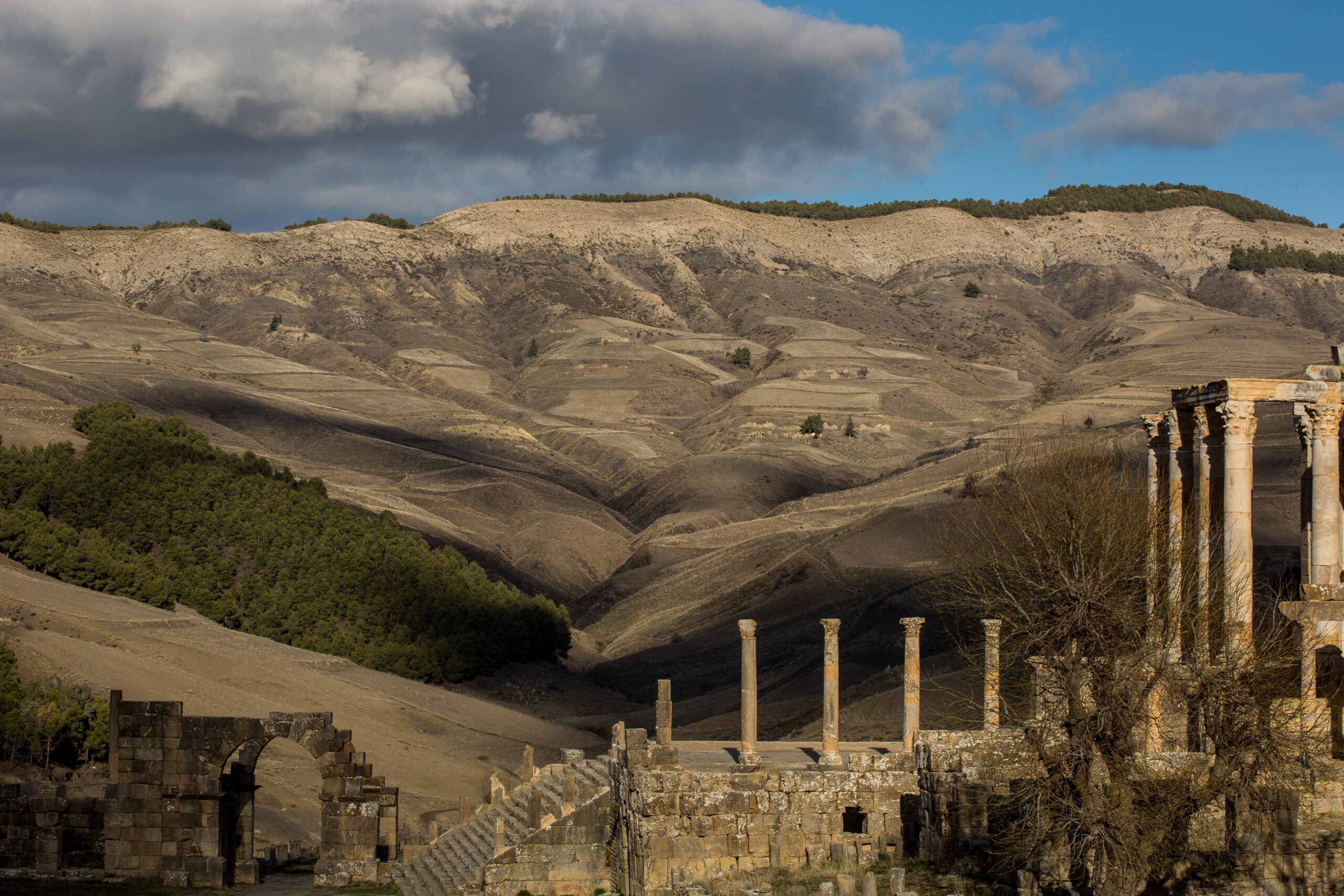
Our popular fifteen-day Algerian Odyssey is a fantastic introduction to Africa’s largest country. On this epic journey you will discover all of the Roman sites featured here as well as exploring the edge of the Sahara desert and meeting the traditional communities of the M’Zab Valley. Tours run twice yearly in April and September.
What our travellers say
Our two different Algeria tours are among Native Eye’s most popular tours. Here’s what some of our previous travellers have said about our Algeria tours.
“We had a fantastic time. Our guides and drivers were extremely friendly and knowledgeable and always punctual. There were so many highlights but the sites at Djemila and Timgad were especially memorable. In both cases we had the entire sites to ourselves and with the spring flowers in bloom they were both extremely attractive”
“It was an absolutely fabulous tour, one of the best we have ever been on. The itinerary was incredibly varied; we couldn’t believe the diversity of things we did and saw. Even the travel days were interesting. The divide between the verdant north and the desert meant it was like visiting two countries in a single trip. We were also impressed by all the tour guides and drivers”.
How to visit
Fancy walking in the footsteps of Roman legionnaires in Algeria. Then get in and we’d be delighted to tell you more. Ring us on 01473 793683 or use our contact form.
Other blogs you may be interested in
Guide to Mauritania Travel
Best Cultural Festivals in Africa for Intrepid Travellers
Let’s Talk About Syria
Contact
Destinations
Terms & Conditions