Lesotho, Eswatini and Mozambique

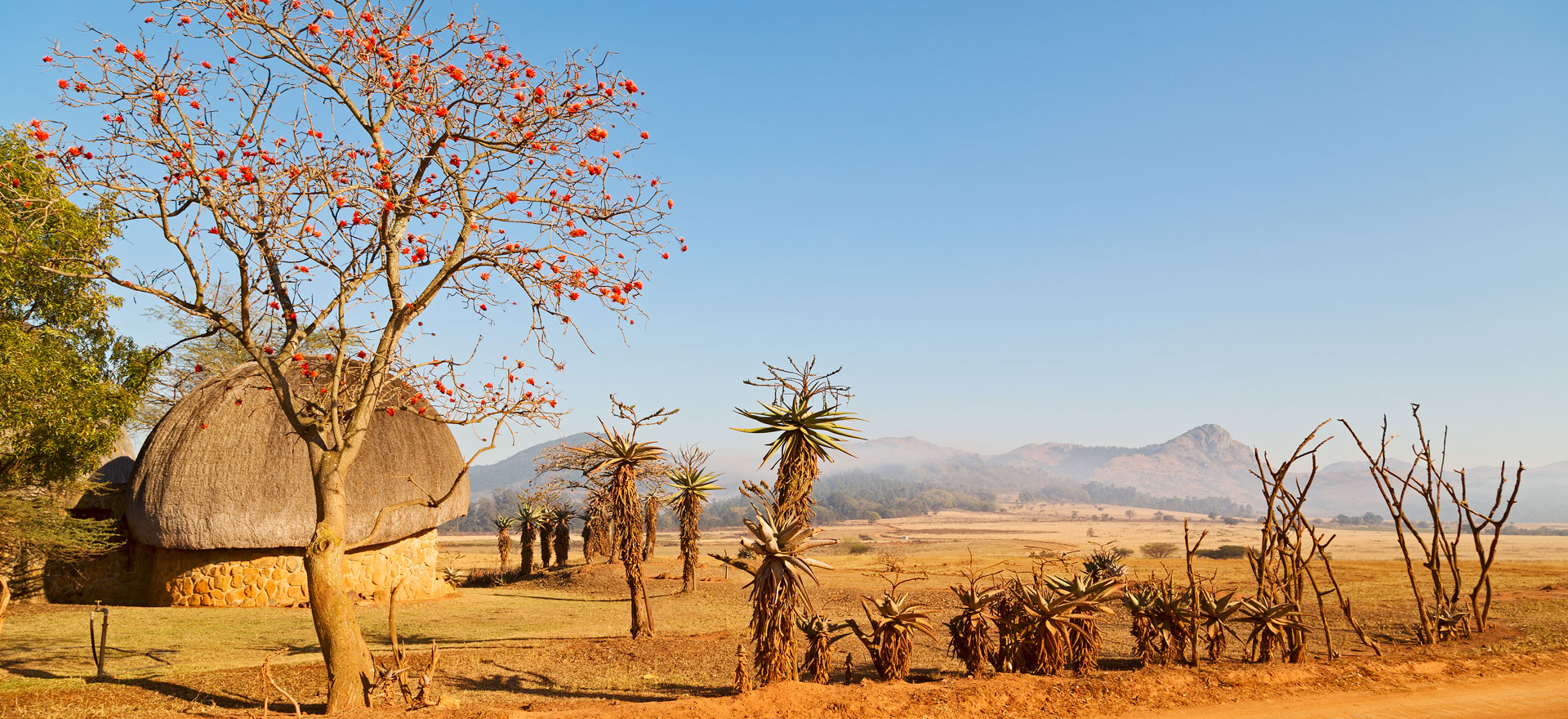
Embark on a captivating journey through three of Southern Africa’s most enchanting and lesser-explored destinations, Lesotho, Eswatini and Mozambique. This carefully designed itinerary combines stunning natural scenery, rich cultural traditions and remarkable wildlife encounters. From the craggy heights of the iconic Sani Pass to the misty cascades of Maletsunyane Falls, and from the historical strongholds of Thaba Bosiu to the serene wildlife haven of Mkhaya Game Reserve and the incredible marine life off Mozambique’s shores, each day reveals a new facet of the landscape, nature and culture.

Whether you’re hiking to see ancient dinosaur footprints, visiting jostling markets, or encountering rhinos in their natural habitat, this tour offers immersive encounters with the people, places, and traditions that make these countries so remarkable.

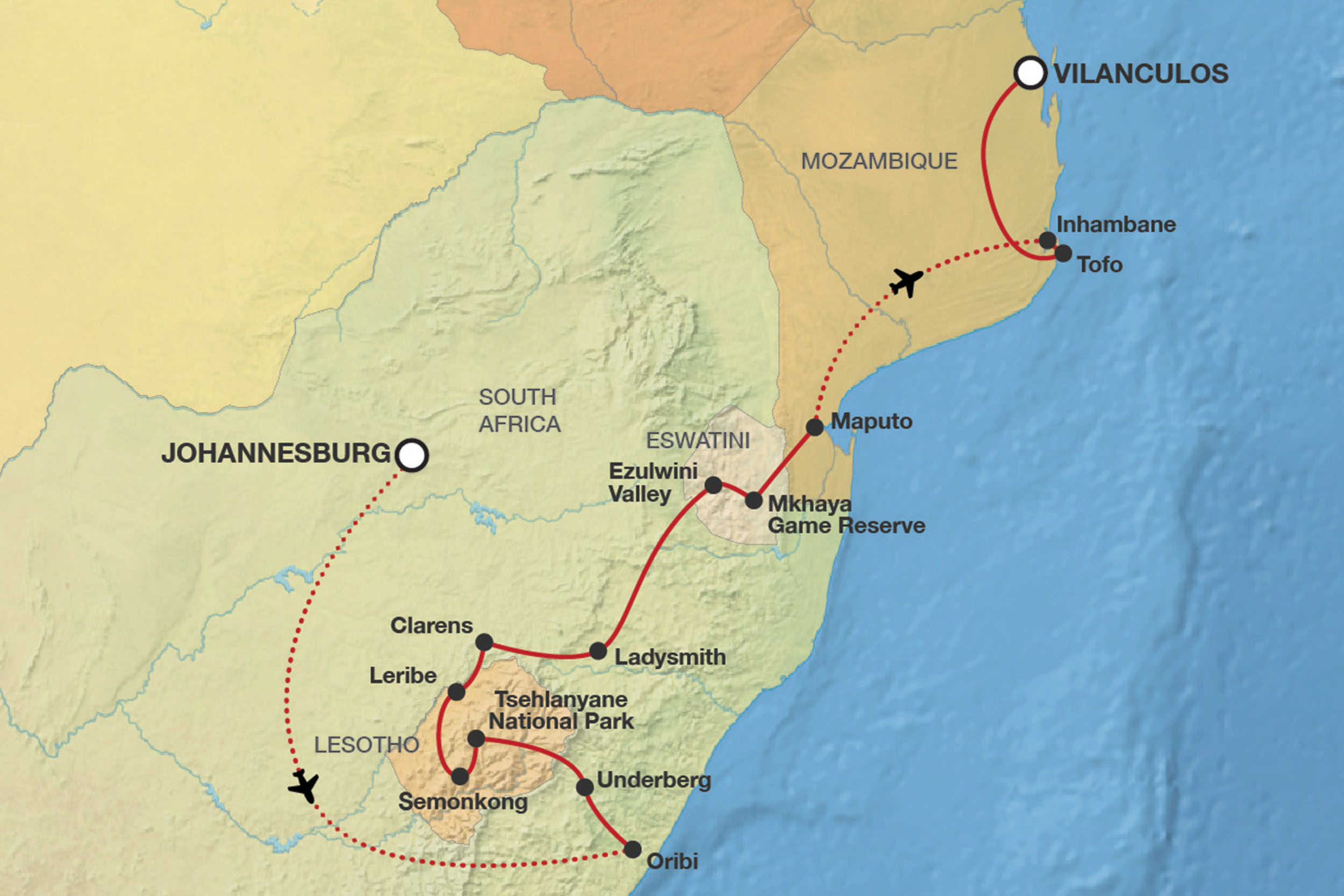
This trip extends from our ‘Journey through Twin Kingdoms’ tour of Lesotho and Eswatini, to venture into Mozambique. After a night in Maputo we head to the stunning coastline of Tofo, taking a boat out into the Indian Ocean to search for whales, dolphins, rays and more. From here we continue to Vilanculos, our base for exploring the idyllic Bazaruto Archipelago.

In two weeks we explore the best of three countries, hiking in Lesotho’s highlands, discovering Basotho heritage and tracking rare wildlife in Eswatini’s protected reserves, with a relaxing but rewarding few days in Mozambique to round it off. Designed with the Africa enthusiast in mind, this trip offers an authentic and meaningful glimpse into some of the continent’s most under-the-radar destinations.

Highlights

  • Look for whales and dolphins in the Indian Ocean
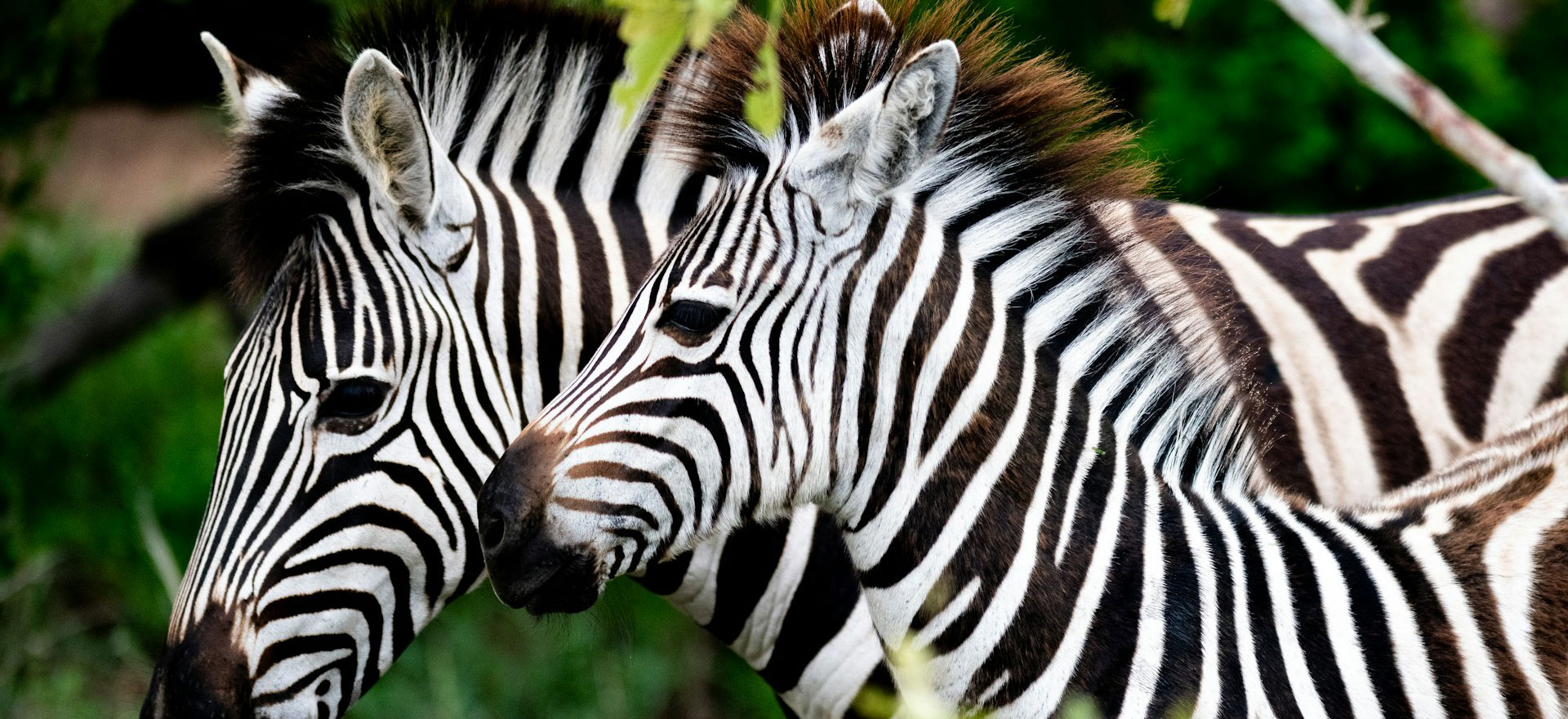
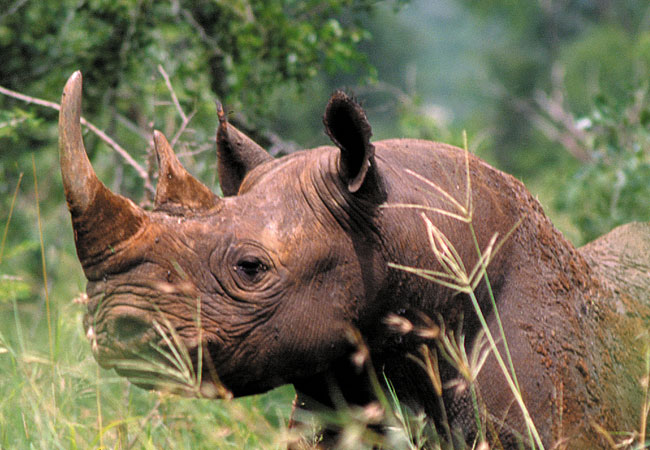
  • Close encounters with Eswatini's iconic wildlife
  • Drive the epic Sani Pass
  • Explore the traditions of Lesotho
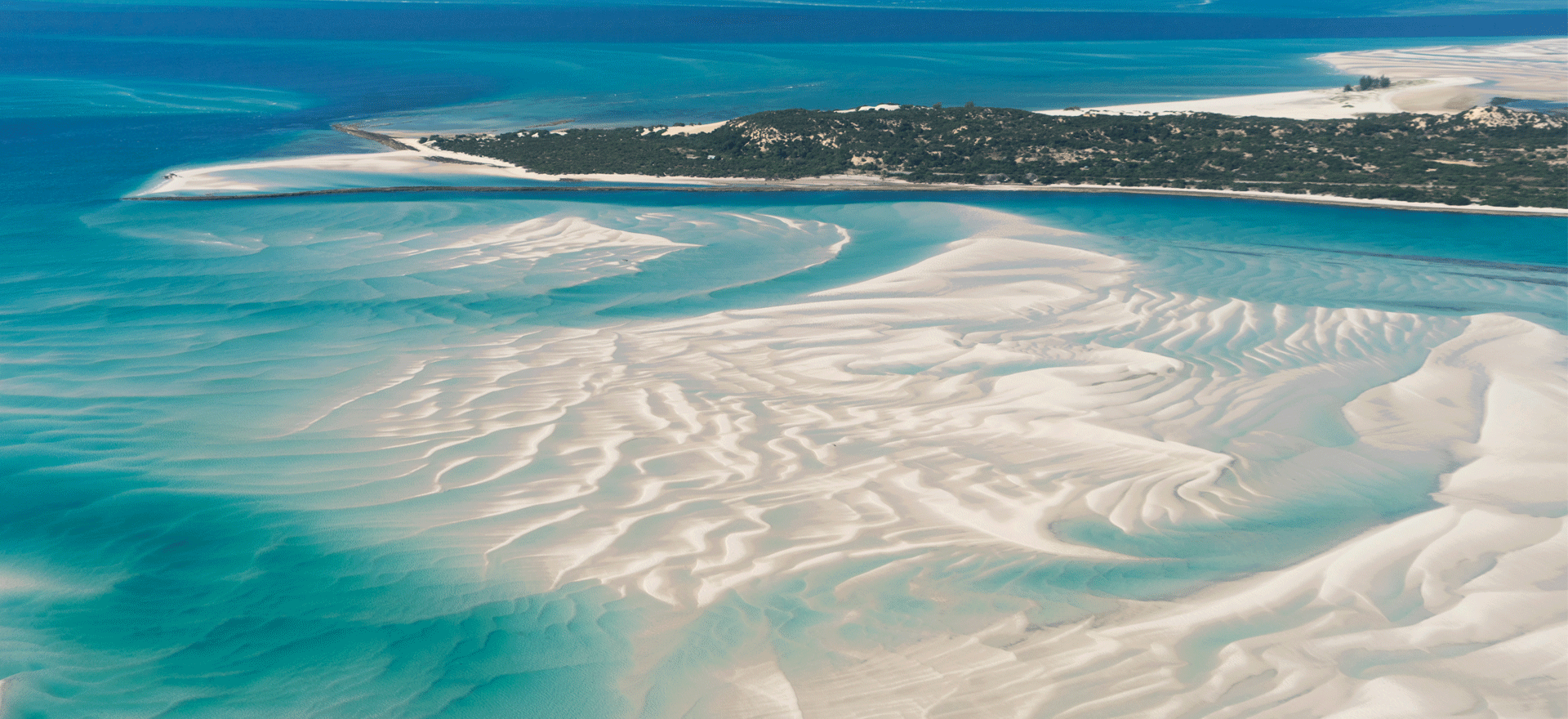
  • The paradise islands of the Bazaruto archipelago

Day 1 - Johannesburg

Arrive in Johannesburg and transfer to the hotel. The rest of the day is free. Overnight Protea Hotel or similar.


Day 2 - Underberg - Sani Pass - Tsehlanyane National Park

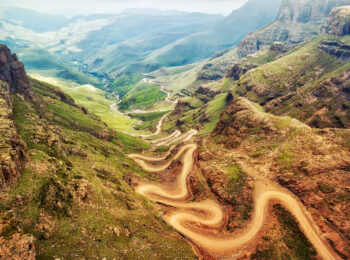
Fly to Oribi and transfer to Underberg. From here we transfer over to 4wd vehicles for our trip over the iconic Sani Pass. We stop in a small shepherds’ village en route to see the baking of traditional bread and the fascinating structure of the huts that the community live in. After crossing the highest point on the pass, Black Mountain, our final stretch takes us along the corkscrew Moteng Pass and into the lush Lesotho lowlands. We spend the night on the outskirts of Tsehlanyane National Park. Overnight Maliba Lodge or similar. (BD)

Sani Pass

Sani Pass is a picturesque mountain road connecting South Africa to Lesotho through the Drakensberg Mountains. It’s steep, rugged, and very scenic, making it a great spot for adventure seekers. The road climbs from 1,544 meters to 2,876 meters and needs a 4WD vehicle to navigate its sharp turns and rough gravel tracks. Once a trade route, it’s now popular for 4WD tours, hiking, mountain biking and taking in the breathtaking scenery from the highest point.

Day 3 - Tsehlanyane National Park – Thaba Bosiu – Semonkong

After breakfast we take a short hike to see dinosaur footprints on the roof of a cave. We then continue to Thaba Bosiu where we visit a cultural centre for an insight into the fascinating history of the Basotho. Reaching Semonkong, The Place of Smoke, we check into our lodge for the night. Overnight Semonkong Lodge or similar. (BD)

Thaba Bosiu

Thaba Bosiu is a historic plateau in Lesotho, about 24 km from Maseru. It was the stronghold of King Moshoeshoe I, who founded the Basotho nation. Its name means “Mountain at Night,” based on the legend that it grows taller after dark to intimidate enemies. The plateau was a natural fortress during conflicts, including the Lifaqane Wars. Today, it’s a national monument featuring a cultural village, museum, and royal cemetery where Moshoeshoe I is buried.

Day 4 - Semonkong

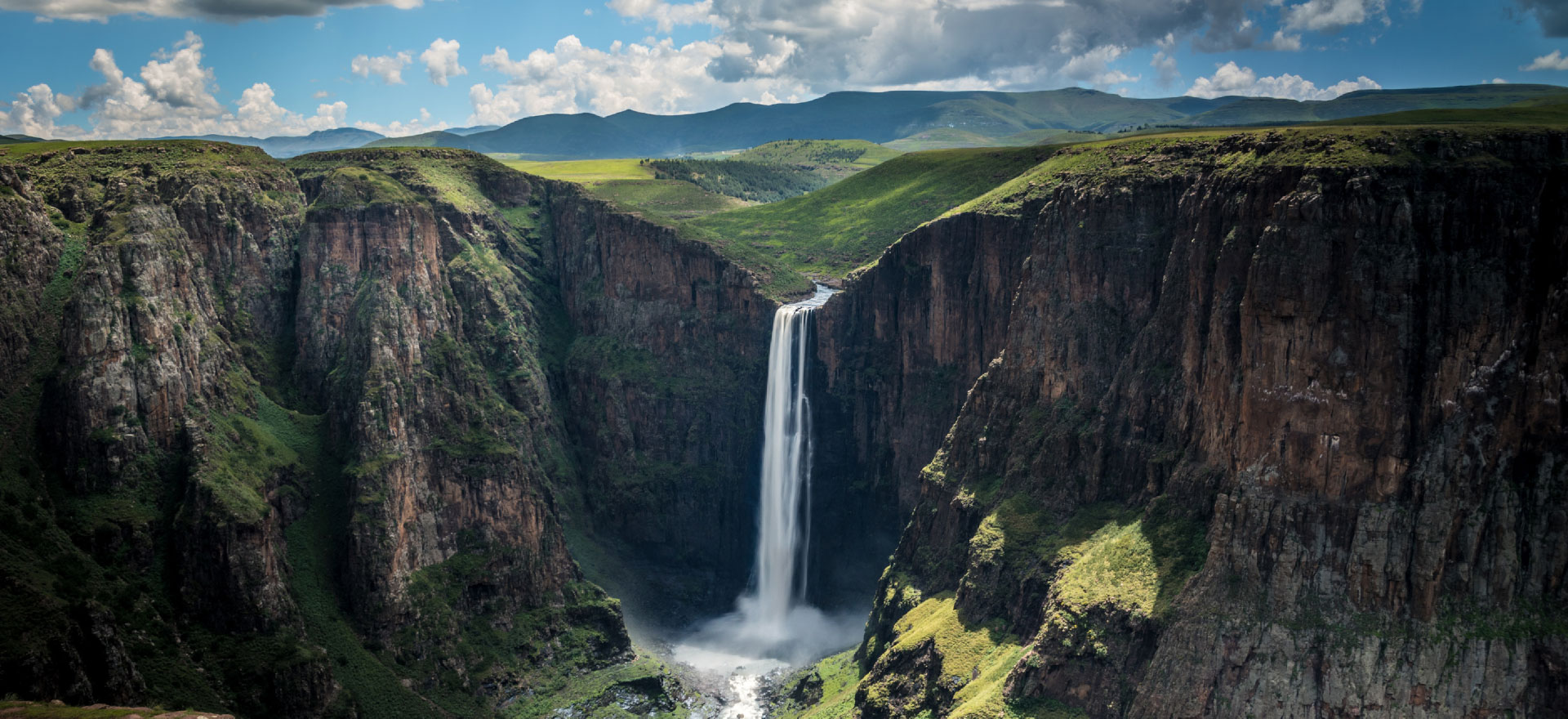
We take an early morning hike to the world famous Maletsunyane Falls, where water crashes into the pool below, known as the ‘Place of Smoke’. In the afternoon there are optional activities to choose from such as a tour of the small local trading town or hiring a bicycle. Overnight Semonkong Lodge or similar. (BD)

Semonkong

Semonkong, meaning “Place of Smoke,” is a small town in Lesotho located in the Maseru District.It is home to Maletsunyane Falls, the highest single drop waterfall in southern Africa at 192 meters, which creates the ethereal mist that gives the town its name. It is a popular spot for pony trekking, hiking, and abseiling, holding the Guinness World Record for the longest single drop commercial abseil. Founded in the 1880s by Basotho refugees from the Basuto Gun War, it continues to showcase Basotho traditions. Visitors can stay at Semonkong Lodge, where you can enjoy activities like fly fishing, mountain biking,  and cultural tours, all while taking in the stunning scenery and warm hospitality.

Day 5 - Mateka – Leribe – Clarens

Leave Semonkong behind and head to Mateka to visit the Ha Kome Cannibal Caves, stopping in the small town of Roma on the way. We also visit the Leribe craft market where local women weave mohair on ancient looms and spin it on bicycle tyres. Later we head into South Africa and the quirky little town of Clarens. On arrival we have time to wander around the art galleries and quaint shops at leisure. Overnight Hotel Mont D’Or or similar. (B)

Leribe

Leribe is a district in northern Lesotho, with Hlotse as its capital, bordering South Africa’s Free State Province. It was founded in 1876 by British missionary John Widdicombe and played a role in the Basuto Gun War, with remnants like Major Bell’s Tower. The district is also home to the Leribe Craft Centre, famous for its mohair products made by local artisans. Nearby, the Subeng Dinosaur Footprints display preserved tracks from multiple dinosaur species. With its fertile farmlands, Leribe remains a key agricultural hub in the country.


Clarens

Clarens is a scenic town in South Africa’s Free State Province, tucked into the foothills of the Maluti Mountains. Known as the “Jewel of the Free State,” it offers picture-perfect views, a thriving art scene, and plenty of outdoor activities. Founded in 1912 and named after the Swiss town where Paul Kruger spent his final years, Clarens is a hub for artists, with galleries, craft shops, and studios championing local talent. Visitors can enjoy hiking, mountain biking, rafting, and horseback riding, while nearby Golden Gate Highlands National Park boasts breathtaking landscapes and wildlife. The town’s cosy accommodations, lively restaurants, and famous Titanic Rock make it a favourite to visit.

Day 6 - Golden Gate Reserve – Ladysmith – Ezulwini Valley

Drive through the majestic sandstone mountains of the Golden Gate Reserve to Ladysmith, where we meet our guide for Eswatini. We cross the border and continue to Matenga Lodge in the Ezulwini Valley. Overnight Matenga Lodge or similar. (BD)


Day - Ezulwini Valley

This morning we visit the Ngwenya glass blowing factory to learn about this age-old art, as well as the Swazi Market and Sibebo Rock. The afternoon is free to relax or we can sign up for additional activities such as hiking or canopy tours.


Days 8-9 - Mkhaya Game Reserve

We leave early this morning (day eight) and drive to Mkhaya Game Reserve, where we will spend the next two nights. We drive through the African bush to our camp, and head out for another game drive in the afternoon, and again on the morning of day nine. There will also be time for a guided bush walk and birdwatching in the forests along the Ngwenyane River. Overnight Stone Camp or similar. (BD)

Mkhaya Game Reserve

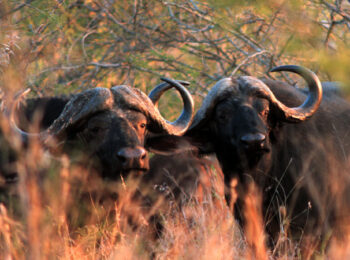
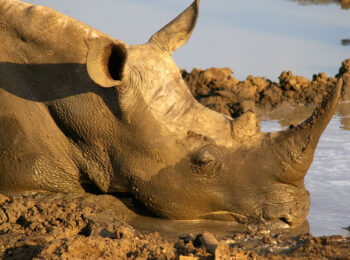
Mkhaya Game Reserve, a private wildlife sanctuary in southeastern Eswatini, was founded in 1979 to protect endangered species. Originally established to save the country’s last Nguni cattle, it has expanded toinclude black and white rhinos, buffalo, sable antelope, and tsessebe. Visitors can experience close
encounters with wildlife through guided safaris in open 4wd vehicles or on foot, with rhinos being a
highlight. Accommodation is available at Stone Camp, a rustic lodge offering an immersive bush experienceand known for its strict conservation security. Mkhaya is one of the best places to see black rhinos in the wild and is self-financed through tourism to ensure its sustainability and conservation efforts.

Day 10 - Mkhaya Game Reserve – Maputo

Final game drive in the early morning before transferring to the border with Mozambique and onwards to Maputo. We then have a brief visit of the city, visiting its key sites such as the Fortress, Cathedral and more. Overnight Southern Sun Hotel or similar. (B)


Day 11 - Maputo – Inhambane - Tofo

Transfer to the airport and fly to Inhambane. From here, transfer to Tofo. Overnight Baia Sonambula Guest House or similar. (B)

Praia do Tofo

Sprawling for several kilometres along the slice of land that separates the Indian Ocean and freshwater Lake Pembane, is the beautiful beach of Tofo, flanked by black coral rock on its south side and the lake and vegetated dunes to the east. A small village acts as the hub with an assortment of eateries, shops and a central market that overlooks the beach below. The beach is the main attraction here and it is a great spot for fishing, diving and surfing. Manta rays can be found off the coast of Tofo, as well as the gigantic whale shark, both gentle species and commonly spotted in the area, particularly between November and April for the latter.

Day 12 - Tofo

Embark on an exciting ocean safari in search of some of the Indian Ocean’s most magnificent marine species. Depending on the season and ocean conditions, you may encounter whale sharks, manta rays, dolphins, sea turtles, and humpback whales (June to October). If conditions permit, there may be opportunities to snorkel alongside whale sharks or manta rays under the guidance of experienced marine guides. Overnight Baia Sonambula Guest House or similar. (B)


Day 13 - Tofo – Vilanculos

Drive north to Vilanculos, along coast and through countryside. The rest of the day is free for you to relax or explore at your own leisure. Overnight Bahia Mar Boutique Hotel or similar. (B)


Day 14 - Bazaruto Islands

Today we explore the Bazaruto Archipelago, taking a boat onto the Indian Ocean. Climb the dunes of Bazaruto Island, snorkel over coral reefs, and enjoy opportunities to spot an array of marine wildlife. A picnic lunch will be served on the islands before returning back to the mainland. Overnight Bahia Mar Boutique Hotel or similar. (BL)

Bazaruto National Park

Bazaruto National Park is Mozambique’s only dedicated marine park and protects the offshore Bazaruto archipelago along Africa’s Indian Ocean coastline, an area of unspoilt reefs, and exciting snorkelling and diving opportunities.  Back in 1971 the archipelago’s five main islands and surrounding ocean were collectively named as Bazaruto National Park, which covers 1430km2 eastward from the coastline between Vilanculos and Inhassoro. The main attractions of the islands lie off their shores, as the surrounding sea boasts coral reefs supporting brightly coloured fish, marine turtles, humpback whales, bottlenose, spinner and humpback dolphins, and big game fish such as barracudas and marlins. Bazaruto also supports the last viable population of the endangered dugong in the region.

With a long history of human occupation, the islands have been inhabited by the Portuguese and home to East Africa’s most southerly Muslim trading settlements. Around the 16th century, the islands were ruled over by Portuguese traders and the surrounding sea was known for producing high-quality pearls. One of the islands was once an ivory trading post and was later used as a penal colony. Interesting historical relics can be found across the islands, including a 100-year-old light house on Bazaruto.

Day 15 - Vilanculos

Transfer to the airport for your flight home. (B)


What's included?

  • Airport transfers

    We include arrival and departure transfers regardless of whether you book flights yourself, or we book them for you. If you’re booking them yourself, then please let us know the details so that we can arrange the transfers. Please note though that if you arrive earlier than Day 1 of the tour, and leave after the final day, we may need to make an additional charge for an airport transfer.

  • Accommodation

    Accommodation as listed in the dossier. The nature of the destinations that we operate may sometimes mean that we need to change hotels, but we’ll always endeavour to keep the same standards. Please be aware that as we operate in many countries where tourism is in its infancy, hotel standards may not be the same as you’re used to elsewhere.

    Please note that while we prefer to use centrally located hotels where possible, this is not always practical and in some locations they may not be the best option in terms of standards or reliability.

  • Guides

    You will be accompanied by English-speaking guides from Johannesburg to Maputo, and after Maputo your excursions and transfers will be co-ordinated by the lodges that you are staying at.

  • Meals

    As listed within the itinerary / dossier (B-Breakfast, L-Lunch, D-Dinner). These will vary from trip to trip – in some areas it makes sense to include all meals while in others there is a good choice of restaurants and we feel people might like to ‘do their own thing’ now and again. Please note that when meals are included, sometimes these will be in hotels, as often these are the most appropriate option, and will sometimes be set menus. Local restaurants are often lacking in variety, as well as the capacity to cater for groups. Drinks are not included and are at your own expense.

  • Entrance fees

    Entrance fees are listed for those sites that we mention within the itinerary. If there are any other sites that you’d like to see, these would be at your own expense.

What's not included?

  • Visas

    We don’t arrange visas for our travellers, but if an invitation letter is necessary then we will arrange this for you. If you need any advice with visas then just give us a call, or alternatively a visa agency such as Travcour (www.travcour.com) can assist.

  • Airport Taxes

    If there are any departure taxes to pay that are not included within the cost of your ticket, you’ll need to pay these yourself.

  • International flights

    Many of our travellers arrive from different destinations and so we don’t include international flights in the cost of our tours. If, however, you would like us to book flights for you, then just give us a call and we’ll be happy to discuss your options.

  • Travel Insurance

    If you need any assistance with this, then let us know – although we can’t arrange it ourselves, we can point you in the direction of a reputable provider that can assist.

Visas

UK citizens can enter Lesotho without a visa for stays of up to ninety days, American citizens for stays of up to 180 days, and Australian and Canadian citizens for stays of up to 14 days.

UK, Americans, Canadians and Australians can enter Eswatini without a visa for stays of up to 30 days.

UK, US and most EU citizens do not need a visa for Mozambique. However, you will need to obtain a travel permit on arrival for around 650 meticais (approx.10 EUR). We will provide hotel confirmations which you will need to present to the authorities along with your return / onward flight ticket.

You should ensure that your passport has at least six months’ validity after the end date of your trip. We also strongly recommend that your passport has a minimum of two blank pages next to each other (per country visited) – on rare occasion it may lead to problems with visas and immigration authorities if it does not.

Health and vaccinations

We are not medically qualified and so we recommend that you speak to your doctor or nearest health professional for advice concerning recommended vaccinations. However, there are no compulsory vaccinations needed to enter either country. For more advice on vaccinations you can also visit https://travelhealthpro.org.uk/countries.

Insurance

It is a condition of joining our tours that you have suitable travel insurance in place, and we cannot accept travellers without insurance. All policies differ in terms of what they will cover, but as a minimum you need medical and health cover which will cover you for the whole time that you are away. Most policies will also include cancellation cover, which will cover you if an unforeseen circumstance obliges you to cancel your trip. We recommend that you obtain your insurance as soon as you book your trip.

Please note that government travel warnings often affect the validity of your travel insurance, and you should check this with your insurance company.

Money

In Eswatini the currency is the lilangeni / emalangeni, which is tied to the South African rand. The rand is legal tender in Eswatini, but note that emalangeni are not convertible outside Eswatini. Most ATMs in Eswatini accept international cards.

Lesotho’s currency is the maloti, also tied to the South African rand. Credit cards are of limited use and outside of the capital it is difficult to exchange money, so it is best to bring enough cash with you.

The currency in Mozambique is the metical (meticais for plural). The ATM network in Mozambique is good and you can find several in the capital as well as most small towns. Please note however that most ATMs accept Visa cards only and have a daily withdrawal limit of Mt3,000 (about US$60). Credit cards are increasingly accepted in the larger cities, although you should tell your bank before using one in Mozambique. US Dollars and South African Rand are the main exchange currencies. If bringing USD, larger bills are preferred – smaller denominations (10 and 20 USD bills) won’t always be accepted at currency exchange facilities.

When to go

All of these countries have a warm tropical climate and are considered year-round destinations. Between the months of November-March it is hot and wet, but this time of year offers lush scenery and an abundance of wildlife, as well as avoiding the very cold winter months in Lesotho.

Culture

Sesotho is the official language of Lesotho and one of the first African languages to be written, although English is common and widely spoken. Most of the inhabitants of Lesotho are Basotho, and their attachment to their local villages and traditions, such as the Ndlamo dance, are still strong.

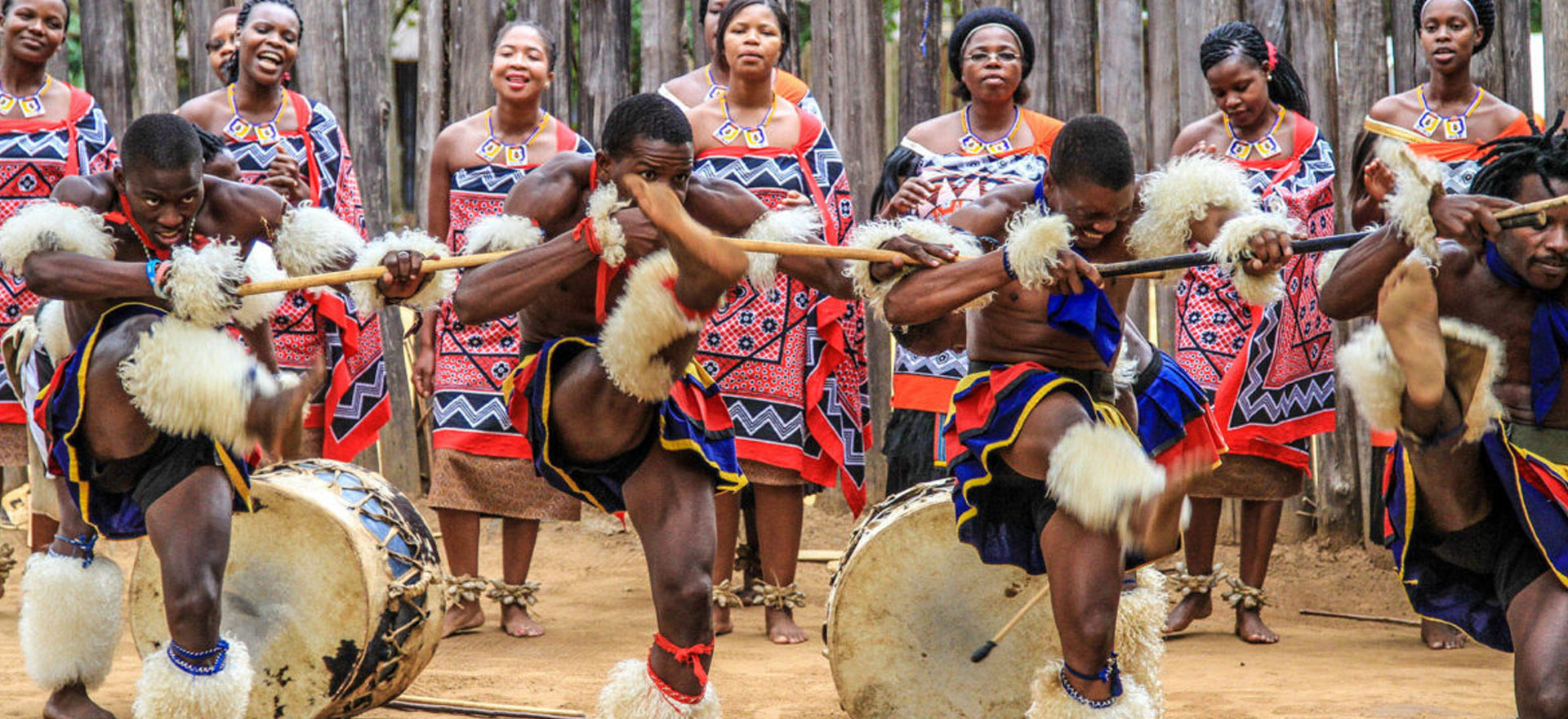
In Eswatini, the language spoken is siSwati which is almost identical to Zulu, but for historical reasons has developed its own identity. Despite the growing number of western influences, Swazi culture remains intact – many men still carry traditional battle axes and women sport traditional beehive hairstyles.

Over 99% of the population in Mozambique are African, and the remainder of the population is made up of Europeans, Indians and east Asians. The official language here is Portuguese, but is only spoken by around 45% of the population, who have been to school. All of Mozambique’s indigenous languages, of which there are around 40, belong to the root Bantu family. Around half of the population here are Christian, with Catholicism being followed by 28% of the population. The remainder belong to Protestant and Muslim faiths.

Eating and drinking

In Eswatini, traditional dishes made with porridge or corn are mostly found in rural homes or at a celebration, but the towns have numerous street cafes which serve up a variety of meals, such as the popular ‘bunny chow’ – a hollow half loaf filled with hot stew. The restaurants here are also known for their excellent seafood.

The cuisine in Lesotho is influenced by a variety of countries, so has a bit more to offer and you will come across fish dishes, stews, kebabs and curries as well as Braai (Southern African barbecue).

In the bigger towns of Mozambique, menus tend to consist of chips or rice with a side salad and fish, chicken or beef. In rural areas, food is often limited to ncima (a type of porridge), beans and meat (usually goat). Fish and seafood is abundant in Mozambique’s south, with it being famed for its shellfish, particularly prawns.

Fruit juices, soft drinks and local alcohol are widely available.

You should advise us when you book if you have any special dietary requirements. We will try to accommodate you as much as possible, but we cannot always guarantee this.

Luggage and packing

The first rule of packing is not to bring too much. There will be plenty of occasions where you’ll need to carry your luggage yourself and so you should be able to do this  without help. Most people are surprised at how little they actually need to bring, and it’s normally possible to get laundry done along the way. It doesn’t matter whether you bring a suitcase, rucksack or holdall, but please don’t bring more than 20kg of luggage as this may be difficult to accommodate in the vehicles we use. You’ll also need a day pack.

Electrical outlets

For up to date information on the sockets types and power plug adaptors required on this trip please visit https://www.power-plugs-sockets.com

Fitness

You don’t need to be especially fit to join this tour, but there will be stairs to climb, hills to walk and sites to explore, so you’ll enjoy it more if you have a reasonable level of fitness.

We want everyone to fully enjoy group activities, so it’s important to be fit enough to keep up with the group. If an activity feels too challenging then in most cases it would be possible to miss it out and rejoin the group later. If you have any concerns please contact us before the tour departs.

Responsible tourism

In this region, like many of the destinations we offer, environmental thinking is not at the forefront of everyday life and you will see a lot of litter in places. However, we ask that you don’t contribute to this and to please take all litter back to the hotel where it can be disposed of properly, including cigarette butts –especially along South Africa’s Garden Route, which is prone to veld fires.

When visiting Tsehlanyane National Park, we encourage sustainable travel practices, such as respecting the land, avoiding littering, and supporting local businesses. As a conservation area, the park is dedicated to protecting unique montane ecosystems and biodiversity.

At Mkhaya Game Reserve, we ask travellers not to feed small animals like monkeys and birds, as this can make them tame and put them at risk or even pose a danger to tourists.

You may well come across beggars. There’s no hard and fast answer on this and everyone has a different view – some feel that giving simply encourages begging while others see it as helping someone in need. Some guidebooks will tell you that you should only give if you see a local person also giving, to determine whether the beggar is genuine. The issue is particularly difficult when it comes to children, but we’d ask that you don’t give to children as in poor communities this can often act as a discouragement to going to school.

If you feel that you’d like to contribute then speak with your guide who will be able to make appropriate suggestions.

Most people like to take photos, and it’s sometimes easy to forget that the photogenic person in front of you may not want their picture taken. Always ask if it’s okay, and respect their wishes if they say no. You’ll often find that in remote villages or among more traditional communities the older generation, and women in particular, are not comfortable with having their picture taken.

On the subject of photography, it’s often forbidden to take photos of ‘sensitive’ areas such as military buildings or border posts, and doing so can land you in trouble with the authorities. If you’re not sure, ask your guide.

Local conditions

When travelling to some of the destinations we offer you need to bear in mind that things won’t always work here as we’re used to them working at home. Travelling in underdeveloped and untouristed destinations requires both patience and a sense of humour. There may be problems with infrastructure, attitudes may be different, and maintenance may not be as high a standard as we would always like, but this is very much part and parcel of travelling in such a place. We aim to resolve any issues as quickly as possible, and thank you for your patience.

Travel advice

We keep a very close eye on the travel advice issued by the UK Foreign and Commonwealth Office so that we can keep you up to date with any warnings. At the time of writing the FCO does not advise against travel to Lesotho or Eswatini.

The FCO does advise against travel to parts of Mozambique, but these are not areas we visit on this tour and are much further north than where our travellers stay and we are confident that we can run trips here smoothly and safely.

This relates to advice from the British government – other nationalities need to check the stance of their own governments.

Please note that the information contained above is highly susceptible to change, and while we endeavour to keep up to date, we recommend that you use this as a guide only. Should you have any questions, please don’t hesitate to contact us.

Date(s)
Price (PP) Exc. Flights
Single Supplement
Trip Status
Date -
11 January 2027
Price (PP) -
£4,899
Single Supplement -
£845
Trip Status -
Available
Date -
15 July 2027
Price (PP) -
£4,899
Single Supplement -
£845
Trip Status -
Available
Date -
08 January 2028
Price (PP) -
£5,099
Single Supplement -
£845
Trip Status -
Available
Date -
08 July 2028
Price (PP) -
£5,099
Single Supplement -
£845
Trip Status -
Available